Study background
Master of Biological Sciences - University of Amsterdam
After my bachelor's degree, I wanted to leave France for my master's degree. And as I want to work in research, I found it essential to follow a programme in English for obvious reasons. The University of Amsterdam finally accepted me in the Ecology & Evolution track of the master and I flew to the Netherlands for this exciting adventure, which enabled me to meet some incredible students from all over the world.


Period : 2022 - 2024 | Credits : 120 ECTS | GPA: 8.2/10 | Diploma : Research in Ecology & Evolution | Link
Bachelor of Biology - University Paris-Saclay
After highschool, I have been accepted by the University of Paris-Saclay for starting a Bachelor of Biology. These 3 years have been full of learnings and happy moment with so many people that I met. I have been involved into student association and I succeeded this bachelor with honors in 2022.


Period : 2019 - 2022 | Credits : 180 ECTS | GPA: 6.5/10 | Diploma : Biology of Organisms and Ecology | Link
Research project background
Quantifying Morphological Convergence in Snakes Across Ecological Niches: A Multivariate Phylogenetically Informed Approach - Master thesis (2024)
The aim of this study to understand the extent of morphological convergence between snakes that have radiated to exploit different ecological niches (arboreal, terrestrial, fossil, aquatic). We plan to quantify head, body, and tail shape in a diverse set of snake species having specialized into different habitats. By examining specimens from different families and ecological groups, we will seek to understand whether snakes with similar ecological adaptations exhibit convergent morphological traits. We will then be able to link these convergent morphological traits to the mechanical constraints imposed by their habitats. We will use comparative phylogenetic methods to analyze the morphological data, assess morphological disparity within habitat-use groups, evaluate phylogenetic signal in the data and test convergence models using specialized statistical packages.
In the present project we aim to quantify body, head, and tail shape in 450 species of snakes representing 15% of the overall species diversity in the group. We will sample snakes that differ in habitat use from each family, maximizing the number of independent radiations into each habitat group. We will subdivide snakes into broad ecological groups (terrestrial, aquatic, semi-aquatic, fossorial, semi-fossorial, arboreal and semi-arboreal). We will take linear dimensions on the head (length, width, height, jaw length, internasal distance, interocular distance, quadrate length), body (snout-vent length, neck, mid-body, and cloacal diameter), and tail (length and mid-tail diameter).
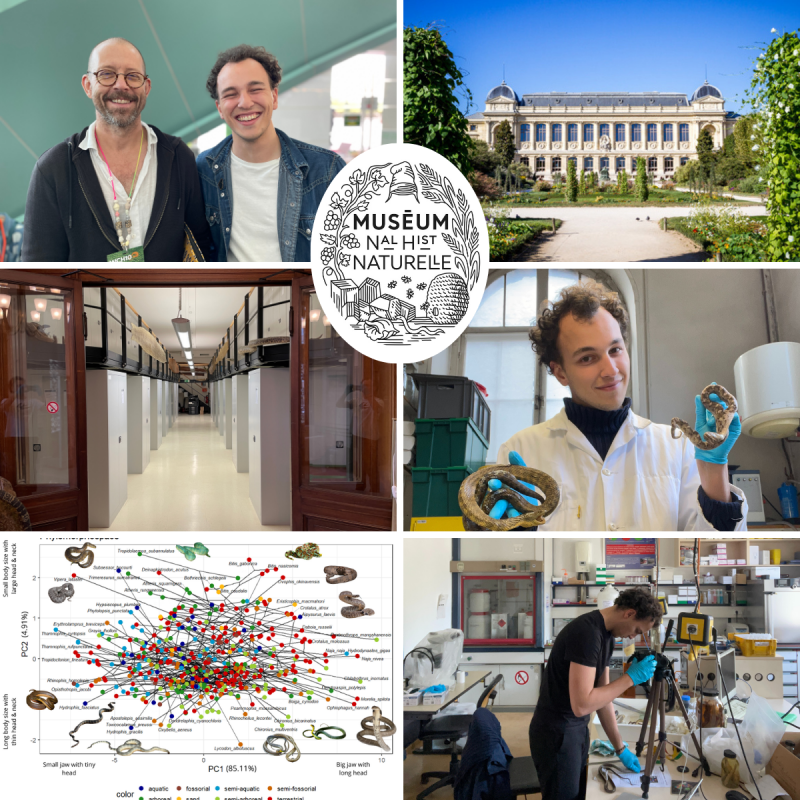
Snakes | Morphometry | 6 months | 2024
Slithering Sentinels : assessing the relevance of sea snakes as bioindicators for monitoring New Caledonia's Lagoon - 2023
To start my second year of my Masters, I had to carry out a literature review on a scientific subject with a research question. I decided to choose sea snakes as my main subject and was lucky enough to match my literature review with some fieldwork!
This was made possible thanks to Xavier Bonnet, who was about to go to New Caledonia to assess the population dynamics of sea snakes and for the project on snake kinematics in which I had already participated twice. I helped Guillaume with his thesis project and at the same time got an insight into my literature review topic: determining whether sea snakes are relevant bioindicators for monitoring the lagoon in New Caledonia.
I had the chance to handle a lot of sea snakes for the CMR and that gave me more and more motivation to study my subject. This experience has given me a lot of memories and experience of snake biology and field research. It was one of the best experiences of my scientific life. In conclusion, sea kraits seem to be very interesting bio-indicators for monitoring the health of reef ecosystems. I can't wait to find out more about them, as we still know very little about many factors.
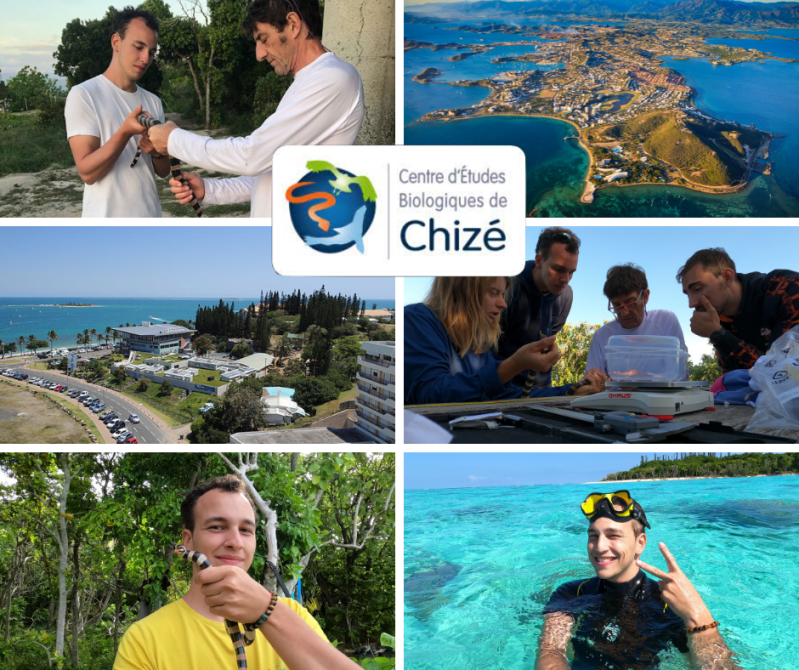
Sea kraits | Bioindicators | 2 months | 2023
Sexual behavioural response of males Fall armyworm - 2023
To finish my first year of a Masters degree at the University of Amsterdam, I had to do an internship in one of the university's science faculties. As I couldn't do it on reptiles, I decided to find something to do with sexual selection, and that's where I met Astrid Groot. She is in charge of several studies on the Fall armyworm (Spodoptera frugiperda), a pest species that causes dozens of crop losses in Africa and other countries around the world.
My subject was the potential alteration of male sexual behaviour in relation to female sex pheromones as a function of larval experience, such as exposure to neem or pathogenic infection. The internship went better than expected because the team I worked with was really cool (Renée, Emily and Eileen).
I finished the placement in July and I learnt a lot during the project, as I was really interested in laboratory work and statistical analysis. The project allowed me to work on aspects of biology that were completely different from what I was used to, and gave me an insight into other subjects in the field of ecology.
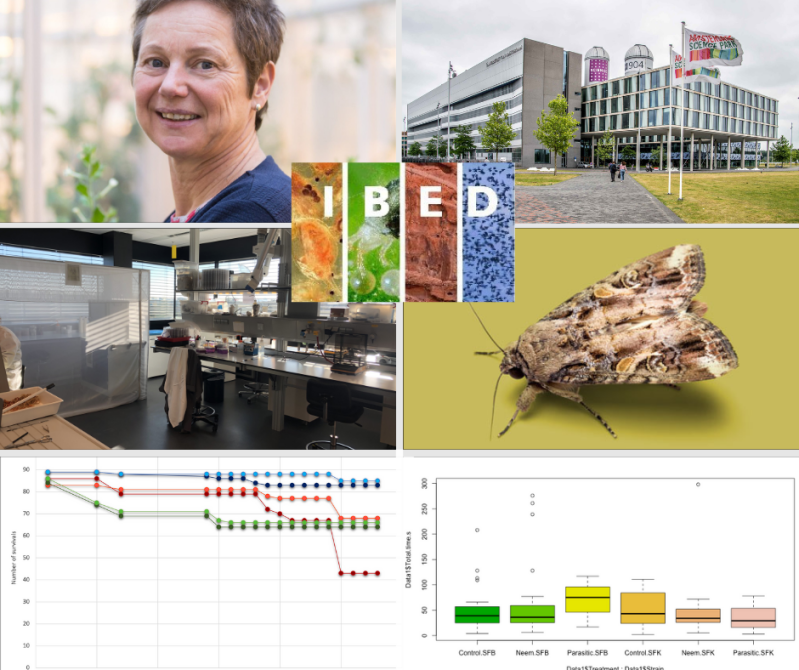
Moth | Behavioural response | 6 months | 2023
Snake swimming : balance between endurance and physical perfomance - 2022
For my final year as a bachelor, I obviously wanted to do another internship on snakes. And as I knew Xavier, I dreamt of doing a placement with him at the CEBC in Chizé. I asked him and 2 months later I was out in the forest looking for snakes. The internship gave me a lot of experience of CMR techniques and working with wild snakes. I got to grips with snakes quite quickly and was very happy to learn all the important things for a herpetologist from Xavier.
The subject was part of the same project on snake kinematic at the museum, but this time it was more of a behavioural approach to snakes. I had the chance to analyse the data of doctoral students on snake kinematics and I drew up a map of the different swimming behaviours of each species present in the region such as : Natrix helvetica, Natrix maura, Vipera aspis, Hierophis viridiflavius and Zamenis longissimus. I met some good friends there, including Thomas, Louis and Gopal. It was by far one of the best internship I've ever had in terms of teamwork, experience, fieldwork, learning and so on.
I hope I'll have the chance to come back to the place that has been my dream since I was a child.
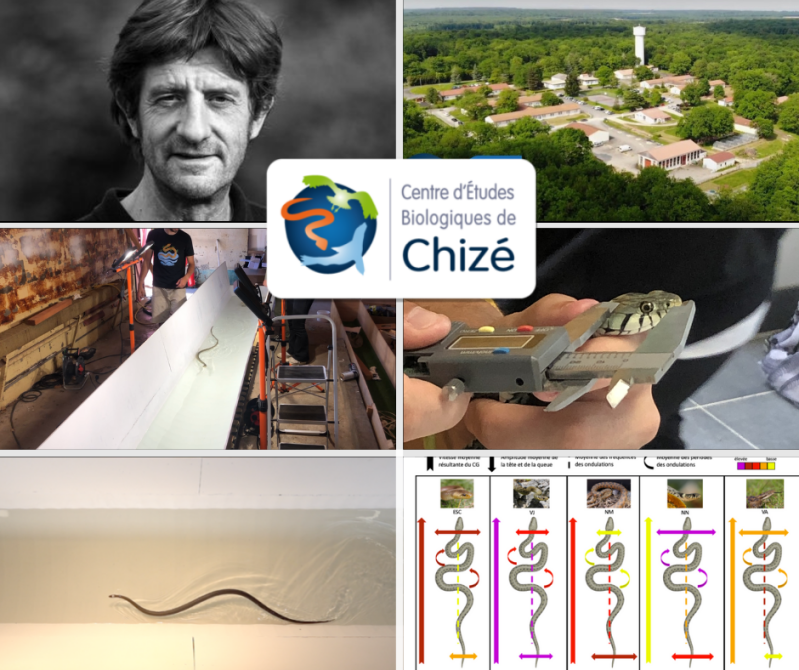
Snakes | Swimming behaviour | 2 months | 2022
The secret of snake swimming revealed - 2021
After completing my first course on sperm whales, I wanted to continue my experience by starting a new course immediately afterwards. And as I was lucky enough to have a lot of contacts, I got Anthony's contact thanks to Xavier, and that's how I got my second internship during summer in a row .
I was very happy to do an internship on snakes because it was my first scientific experience on reptiles. And also because I met Anthony, who was going to be one of the most influential people in my future. I also met one of my good friends during this project : Louis.
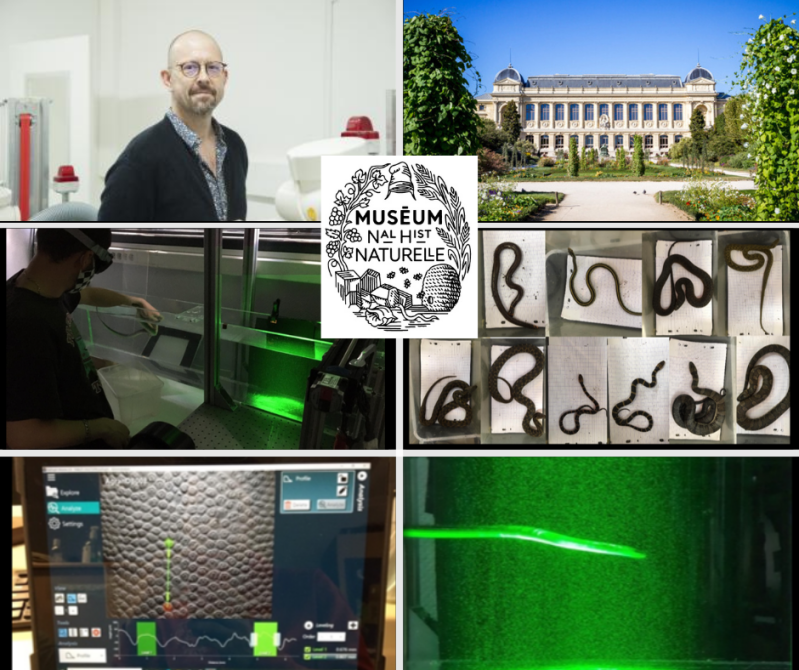
We had the chance to handle different species of water snakes in order to collect data for a PhD student specialising in fluid dynamics. We also had the opportunity to use a scientific instrument to scan the scales of around a hundred species of snake in the museum's collection. I have very good memories of those days when we handled hundreds of dead snakes preserved in alcohol but so well preserved that they were fascinating to handle. Together with Louis, we created a database with s3D scale measurements of hundreds of snakes for further research into the fluid dynamics of snakes. I didn't get any marks from my university because this internship was purely optional, but it was a very rich learning experience for me.
Aquatic snakes | Kinematic | 1,5 month | 2021
Ethoacoustic study of spermwhale group in Mauritius - 2021
As I was required to do a 2-month research internship in my 2nd year of my degree, I started to use the contacts I had since I was young. But for my first internship, I wanted to do something on cetaceans, which are one of my greatest passions along with snakes. So my first scientific placement was on sperm whale ethoacoustics. I was lucky enough to work on this subject when I met Olivier Adam during an optional course on animal behaviour in the first year of my bachelor at the Université Paris-Saclay. He is a bio-acoustician and I have a very good relationship with him since he was very kind to me during my first internship as an undergraduate student.
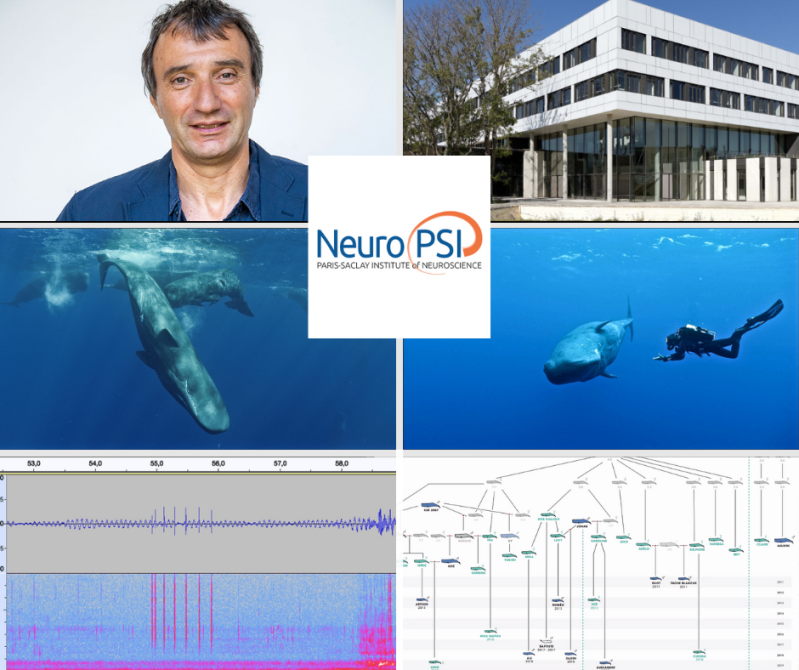
My research focused on establishing links between observations of social behaviour and acoustic data from hundreds of videos of a group of sperm whales based on the coast of Mauritius. I learnt a lot about how to analyse acoustic data and animal behaviour.
The videos were supplied by a team led by François Sarano in Mauritius. This first contact with the world of research was a very good experience for me and I was very happy to find a subject like this during covid... Fortunately, I obtained some interesting results from the point of view of an undergraduate student, and I got good marks for my work.
Spermwhales | Ethoacoustic | 2 months | 2021
Créez votre propre site internet avec Webador